GEOTECHNICAL ENGINEERING
LAREDO
HomeSlopes & WallsActive/passive anchor design

Active and Passive Anchor Systems for Laredo Construction Projects

Knowledgeable. Thorough. Resourceful.

LEARN MORE

Laredo’s position along the Rio Grande means construction frequently contends with thick sequences of alluvial sands and clays. Designing reliable anchor systems here is not just about pullout capacity; it’s about managing groundwater fluctuations and the rapid drawdown effects that can destabilize excavation walls. The CPT testing program often guides the bond length calculation through continuous profiling of the river terrace deposits. Our technical team analyzes the interface between grout and soil under both drained and undrained conditions, ensuring each active or passive tendon meets the performance criteria specified in the project’s geotechnical baseline report.

Differentiating between active pre-stress requirements and passive deformation tolerance is the core of safe anchor design in Laredo’s variable alluvium.
Our service areas

Methodology and scope

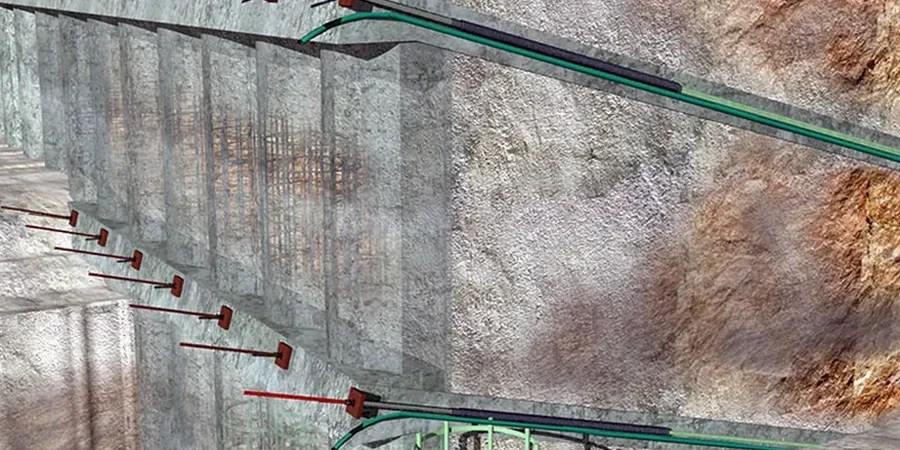
The alluvial deposits underlying Laredo, with SPT N-values sometimes dropping below 10 in the upper 20 feet, require a precise differentiation between active and passive anchorage. Active anchors are pre-stressed to control lateral movement immediately, while passive anchors mobilize resistance only after deformation occurs. For projects near the international bridges where settlement tolerance is minimal, the active approach proves essential. We integrate data from SPT drilling with laboratory shear strength testing to calibrate the design bond stress, avoiding overly conservative assumptions that inflate costs without adding safety. Load testing on sacrificial anchors then validates the theoretical capacity before production drilling begins.
Active and Passive Anchor Systems for Laredo Construction Projects
Technical reference — Laredo

Site-specific factors

With Laredo’s average elevation around 438 feet and its location within a region of moderate seismic hazard, overlooking the nuanced behavior of passive anchors in soft clay lenses poses a real construction risk. A passive anchor that requires excessive movement to develop force can compromise adjacent structures long before reaching its design load. The consequence is often costly litigation and emergency shoring measures. Our approach includes finite element modeling of the excavation sequence, correlating the load-deformation curve of each anchor with the allowable settlement of nearby utilities and pavement. This verification step, aligned with the observational method in IBC, prevents the unpleasant surprise of a failing tieback system during the critical excavation phase.

Need a geotechnical assessment?

Reply within 24h.

Email: contact@geotechnical-engineering1.org

Regulatory framework

IBC 2021 Chapter 18 (Soils and Foundations), PTI DC35.1 (Recommendations for Prestressed Rock and Soil Anchors), ASTM A416 (Steel Strand for Prestressed Concrete), ASTM D1586 (Standard Penetration Test), ASCE 7-22 (Minimum Design Loads)

Typical values

ParameterTypical value
Anchor TypeActive (pre-stressed) / Passive (non-stressed)
Soil Stratum in LaredoRio Grande alluvial sands and clays
Applicable StandardPTI DC35.1, IBC Chapter 18
Typical Bond Length15 to 40 ft depending on stratum
Corrosion ProtectionClass I or II per PTI recommendations
Load Testing ProtocolPerformance, proof, and creep tests
Design LifeTemporary (≤2 years) or permanent (75+ years)

Common questions

What is the typical cost range for anchor design on a Laredo commercial excavation?

The engineering fee for a complete anchor design package, including the geotechnical interpretation and load test specifications, generally ranges from US$960 to US$4,030 depending on the number of anchors, the complexity of the soil profile, and the required corrosion protection level.

When is an active anchor required instead of a passive system?

Active anchors are required when lateral movement must be strictly controlled, such as adjacent to the historic buildings in downtown Laredo or near sensitive infrastructure like the World Trade Bridge. The pre-stressing locks off the load immediately, preventing the soil mass from relaxing.

How do you verify the capacity of anchors in Laredo’s sandy soils?

We specify a sacrificial anchor test program performed before production work begins. These anchors are loaded to failure or to 133% of the design load to confirm the ultimate bond stress. The results are compared against the CPT tip resistance and SPT blow counts to refine the final design.

What corrosion protection grade is needed for permanent anchors?

For permanent installations in Laredo, we typically specify Class I protection, which encapsulates the tendon in a corrugated plastic sheath filled with cement grout. This double barrier is essential given the fluctuating groundwater chemistry in the Rio Grande alluvium.

Location and service area

We serve projects in Laredo and surrounding areas.

View larger map