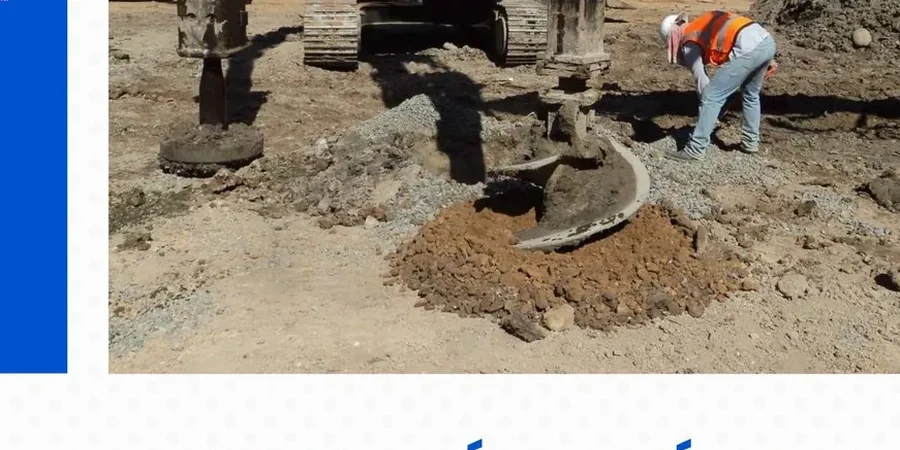
A lot of folks don't realize that Laredo's geology isn't just hard caliche everywhere. Near the river, especially around the downtown warehouse district and south of the Juárez-Lincoln Bridge, we consistently encounter soft alluvial clays and silts from the Rio Grande floodplain. When a new logistics hub or a public works yard gets planned on these deposits, conventional footings just settle too much. That's where stone column design comes in. It's not a one-size-fits-all specification; it requires adjusting the column diameter, grid spacing, and the vibro-replacement energy based on the undrained shear strength measured in the top 20 feet. We often combine our design with a CPT test to delineate the compressible layer boundaries before finalizing the grid, because guessing with SPT alone can miss thin, highly sensitive silt seams that cause differential settlement under heavy truck traffic.
A well-designed stone column grid can cut total settlement in half compared to untreated Laredo floodplain clay, but only if the load transfer platform is detailed correctly.