The US 83 corridor through Laredo sits on Pleistocene-age terrace deposits and Holocene alluvium from the Rio Grande, where the depth to groundwater can be a mere 10 feet depending on the season. When Webb County engineers design roadways or commercial pads on these variable clayey sands and silts, the soaked laboratory CBR value becomes the single most critical number for the structural section. A sample taken from a site near Mines Road will behave very differently after saturation than one from the caliche-rich soils east of I-35. Without the right grain-size distribution and Proctor correlation, a CBR test is just a number.
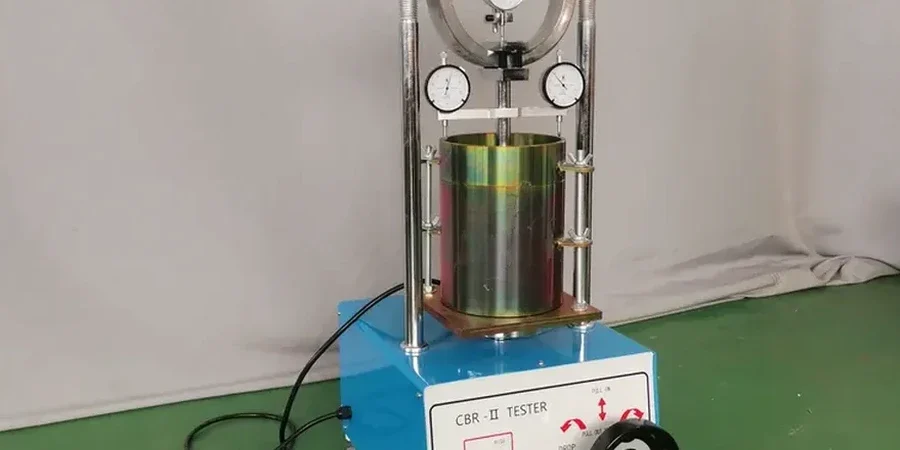
Our laboratory processes samples under ASTM D1883 and AASHTO T 193, measuring penetration resistance of remolded specimens compacted at target moisture contents. The test simulates the worst-case scenario: the soil is soaked for 96 hours to represent long-term saturation conditions that occur under Laredo's impermeable pavements. The resulting CBR value, typically between 3 and 12 for local clays, dictates whether the subgrade needs stone-columns or cement stabilization before placing base material.
A soaked CBR test on Laredo's clayey subgrade doesn't just give you a number — it reveals whether your pavement will survive the first summer flood.